
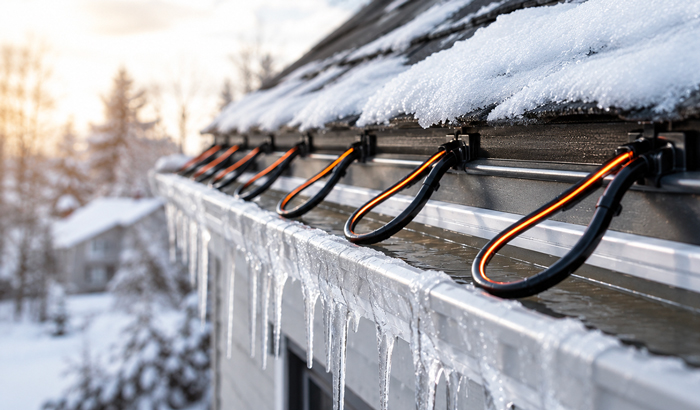
If you've dealt with ice dams or frozen gutters, you've probably heard about heat cables — the electric heating elements installed along the roofline and through gutters to prevent ice buildup. They're a legitimate solution for certain situations, but they're also frequently misunderstood and sometimes misapplied.
Here's a straightforward look at how they work, where they help, and what homeowners should know before installing them.
What Heat Cables Actually Do
Heat cables — also called heat tape or de-icing cables — are low-wattage electric resistance cables that run along the roof edge, through gutters, and down downspouts. Their purpose is to create and maintain a drainage path through snow and ice.
- They do not prevent all ice formation.
- They create a channel that allows meltwater to drain instead of backing up under shingles.
- Self-regulating cables automatically adjust heat output based on temperature.
- Constant-wattage cables operate at a fixed output regardless of conditions.
- Most residential systems are installed in a zigzag pattern along the roof edge and continue through gutters and downspouts.
Heat cables do not stop ice dams from forming. Their primary job is to create a drainage channel that allows meltwater to escape safely instead of backing up into the roof system.
Where Heat Cables Make Sense
Heat cables are not a universal solution. They work best in specific situations where roof design, shade, or ice history creates recurring problems.
- Roofs with low or complex pitches where snow tends to remain in place.
- Homes with a history of recurring ice dams.
- North-facing roof sections that stay frozen longer than the rest of the roof.
- Homes where insulation or ventilation upgrades are difficult or impractical.
- Gutters located in heavily shaded areas that remain frozen long into spring.
What Heat Cables Won't Fix
Heat cables are a management tool, not a root-cause solution. The underlying cause of many ice dam issues is heat loss from the living space through the attic.
- Poor attic insulation allows heat to escape and melt snow unevenly.
- Inadequate attic ventilation contributes to inconsistent roof temperatures.
- Heat cables consume electricity throughout the winter season.
- They do not repair existing gutter damage or failed seals.
Installing heat cables on damaged gutters is not recommended. Existing leaks, failed seals, or rust should be repaired before adding a de-icing system.
Installation Considerations
Proper installation is critical. A poorly installed system may be ineffective and can create additional maintenance concerns.
- Cables should extend through every downspout.
- The zigzag pattern should reach high enough on the roof to maintain drainage above the ice-dam zone.
- All connections and end caps must be properly weatherproofed.
- Self-regulating cable is generally the preferred option for residential installations.
Ongoing Use and Maintenance
Like any exterior system, heat cables benefit from regular inspection and seasonal maintenance.
- Inspect cables each fall before freezing temperatures arrive.
- Look for cracked insulation, damaged sections, or loose connections.
- Clear debris from gutters before activating the system.
- Test the cables before winter rather than waiting until the first major freeze.
- Turn the system off when winter conditions have passed.
Is It Right for Your Home?
If you've experienced ice dams, frozen downspouts, or winter overflow damage, heat cables may be worth considering. They are particularly effective when roof geometry, shade, or exposure makes ice formation a recurring challenge.
The best results come when heat cables are paired with clean gutters, sound seals, proper drainage, and a well-maintained roofing system.
We Can Help
If you're unsure whether heat cables make sense for your home, Gutter Protect can provide an honest assessment. We'll help determine whether heat cables, improved maintenance, or another solution is the best fit for your situation.
Call or text: 519.732.0081
Website: gutterprotect.ca
Serving: Brantford, Ontario and surrounding communities
Protect what matters.